Salzburg
Salzburg Population: City Size, Trends and Context
Why Salzburg population matters
This guide covers the current Salzburg population figure, how the city count differs from Salzburg State and wider Austrian numbers, and why that matters when you plan a trip, a move, or a business visit. Use the city figure only for Salzburg in Austria, not for the state or the country. Statistics Austria is the anchor source here, so the point is to keep the boundaries straight before you compare anything. That saves you from reading a city number as if it described the whole region.
Current population in Salzburg

The latest official Salzburg population count comes from Statistics Austria and refers to the city of Salzburg in Austria, not Salzburg State. Salzburg is Austria’s statutory city and the state capital, so the city boundary is the one that matters when you are reading local figures. That is the count you should use for central services, business planning, and any first-time view of the city’s scale.
Population figures can differ from one source to another because the date and the boundary are not always the same. A city total, a state total, and an Austrian total answer different questions, and mixing them leads to bad comparisons. For Salzburg, keep the city figure separate from Salzburg State and from Austria as a whole. That is the only clean way to read the numbers.
How Salzburg city and metro numbers differ

The Salzburg population you see in search results depends on the boundary. Salzburg city proper is only one unit, Salzburg State is much wider, and the wider urban area sits somewhere between the two. If you use an Austria figure without naming the boundary, you end up comparing the wrong places. That is why local planning pages, census tables and travel articles often disagree.
The Salzach River gives you a useful mental line through the city, but it is not a population boundary on its own. It helps explain why some figures track the river corridor while others stop at the city limit. For Austria comparisons, keep the same definition every time: city with city, state with state, or the whole country with the whole country. Mix those up and Salzburg looks larger or smaller than it really is.
For business planning, the city count is the one that matters for footfall around the centre, hotels and short trips. Salzburg State matters when you are looking at supply chains, commuting and regional services. Use the boundary that matches your question, or the Salzburg population figure in front of you will mislead more than it helps.
How the population has changed over time
Official trend data comes from Statistics Austria, and that is the source to use when you want a clean comparison. Keep the same definition across years, because a city series and a Salzburg State series do not tell the same story. The city has not moved in a straight line on its own, since housing supply and migration can change counts faster than natural growth.
Look at dated points as a sequence, not as isolated numbers. A city table can show a slow rise, a flat spell, or a short jump tied to new residents, while the state total usually smooths those swings over a larger area. That wider base makes Salzburg State easier to compare with Austria, but it is a weaker guide to what is happening inside the city limits.
For any Salzburg population trend, pick one series and stay with it. If you mix years from the city with years from the state, the pattern becomes useless for planning or for a quick business read.
What the population mix means for daily life
Salzburg population patterns matter because the city is compact, not spread out. That keeps housing pressure high near the centre, while services cluster in a few streets and districts rather than across a wide urban area. You feel it in the split between short-stay tourism, students, and commuters who move through the city at the same times each day.
The Salzach River shapes that movement. Crossings concentrate flow, so daily life can feel busier on the approaches to bridges and calmer just a few blocks away. For business readers, the useful clue is timing: daytime demand rises around offices, schools, and rail arrivals, while evening life shifts more sharply than in a larger city. A younger, mobile mix keeps rental stock tight and makes central neighbourhoods more competitive than outer ones.
Citation notes for Salzburg population facts
Use Statistics Austria for the official Salzburg population figure, and keep Austria and Salzburg State labels exact. For Salzburg geographic context, place the city against the Salzach River. That avoids mixing city, state and national counts when you compare figures or cite them.
Where to stay in Salzburg
Hotels in Salzburg that fit this guide:
- master Mirabell (4-star · rated 10/10 · 3679 reviews) — In Elisabeth-Vorstadt near Salzburg centre, Elisabeth-Vorstadt district Lehen access suits travellers who want WiFi, family rooms, and a terrace.
- The Little Guesthouse (rated 9.7/10 · 1096 reviews) — With Josefiau district location by Volksgarten park, this guesthouse fits stays where free parking, a garden, and a concierge matter for a short trip.
- Bloberger Hof (3-star · rated 9.4/10 · 1116 reviews) — A 3-star option in Birkensiedlung, about 5 km from the centre, works well for families using a swimming pool and children’s playground.
- Hotel Sacher Salzburg (5-star · rated 9.5/10 · 746 reviews) — Set in Elisabeth-Vorstadt within Mönchsberg by the Salzach River near Makartplatz, it suits guests wanting fitness facilities and room service.
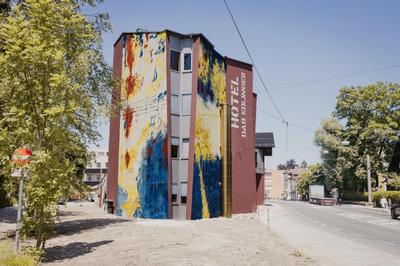
- Das Edlinger (4-star · rated 10/10 · 3411 reviews) — Located 1.9 km from Salzburg centre in USFA Wohnhaussiedlung, Das Edlinger suits travellers who need WiFi, a bar, and pet-friendly rooms.
- Pension Elisabeth – Rooms & Apartments (rated 9.4/10 · 2757 reviews) — Just 1.4 km from Salzburg centre in Elisabeth-Vorstadt, Pension Elisabeth works for guests who prefer a garden, terrace, and family rooms.
- Haus Salzburgblick (ehem. Haus Elisabeth) (3-star · rated 9.2/10 · 1064 reviews) — With its Mönchsberg-area Garten, playground, and terrace-based apartment options, Haus Salzburgblick suits family stays beyond the centre.
- Hotel Schloss Mönchstein (5-star · rated 9.9/10 · 314 reviews) — In Elisabeth-Vorstadt’s Mönchsberg district about 0.6 km from Salzburg centre, Hotel Schloss Mönchstein suits guests who want a pool and 24-hour front desk.
- Hotel Wolf (4-star · rated 9.6/10 · 1249 reviews) — Located in Elisabeth-Vorstadt Äußerer Stein around 0.7 km from Salzburg centre, Hotel Wolf fits family trips with room service, laundry, and pets allowed.
- Hotel Schloss Leopoldskron (rated 9/10 · 3543 reviews) — In Gneis within the Mönchsberg district, Hotel Schloss Leopoldskron suits travellers looking for a garden, terrace, and mini golf with free WiFi.
Common questions about Salzburg population
What does the name Salzburg mean?
The name points to salt and the old salt trade. That matters because Salzburg’s identity and growth were shaped by movement, trade and administration, not by a single metro-style core. When you read population figures, keep the city boundary separate from Salzburg State and from Austria.
How do you pronounce Salzburg?
Say it as “SALTZ-burg” in English. The spelling stays the same in place names and official references, so the key thing is not the pronunciation but the boundary you use. Salzburg city, Salzburg State and Austria are three different counts, and they answer different questions.
Why do Salzburg city and Salzburg State population figures differ?
Because they measure different areas. Salzburg city is the statutory city inside Austria, while Salzburg State is much wider. A city total tells you about the centre and local services; the state figure is better for regional planning and wider comparisons.
Which Salzburg population figure should you use for business planning?
Use the city figure for footfall, hotels and short trips. That is the cleanest way to read the Salzburg population if you care about central demand. For commuting, supply chains and regional services, Salzburg State gives the broader picture, but it is less precise for the city centre.
How should you read Salzburg population trends over time?
Read them as one series, not a mix of city and state numbers. Statistics Austria is the anchor source for that comparison. A city series can move differently from Salzburg State because housing, migration and local change affect the centre faster than the wider region.
What to take away from Salzburg population figures
Salzburg population figures only make sense when you keep the city, Salzburg State, and Austria separate. Statistics Austria is the anchor source for that distinction. Use the boundary that matches your question, then read the numbers in context before drawing any business or travel conclusion.